Free printable mental health worksheets and guides
Free, evidence-informed, one-page explainers and worksheets you can download, print, and share. These are the plain-language mental health handouts that therapists, teachers, and everyday people keep close: free CBT thinking-trap references, a grounding card for panic and overwhelm, a nervous-system map, a sleep wind-down routine, an emotion vocabulary, and more.
Every resource is created under the direction of Shariq Refai, MD, MBA, board-certified psychiatrist, and each links back to the concept it explains in the Shrink Atlas so you can go deeper. No sign-up, no email, and no ads. Pick the area you're working on below, or browse them all. Want to post one? Every card has a ready-made image and a full swipe-through carousel for Instagram, Facebook, and Stories.
Clinician, counselor, or teacher? These are cleared for use with patients and students. See free handouts for clinicians.
Understand your thinking
Spot and reframe the thought patterns that fuel anxiety and low mood.
Cognitive Distortions: 11 Thinking Traps
A one-page CBT reference for spotting biased thoughts and reframing them. The kind of sheet therapists and teachers print.
The Overthinking Loop: A Worksheet
A worksheet to interrupt rumination and worry, and find one real next step instead of spinning.
The Thought Record
A CBT worksheet to catch a hot thought, weigh the evidence, and find a fairer one.
Calm anxiety and the stress response
Body-based tools for overwhelm, panic, and stress.
The Window of Tolerance
A nervous-system map: how stress pushes you out of your steady zone, the signs of each state, and simple ways back.
The Stress Response: Fight, Flight, Freeze, Fawn
The four automatic ways the body meets a threat, what each is doing, and one way to steady each.
Grounding Techniques: A Pocket Card
Six simple, evidence-informed ways to come back to the present when you feel overwhelmed or anxious. Print and keep.
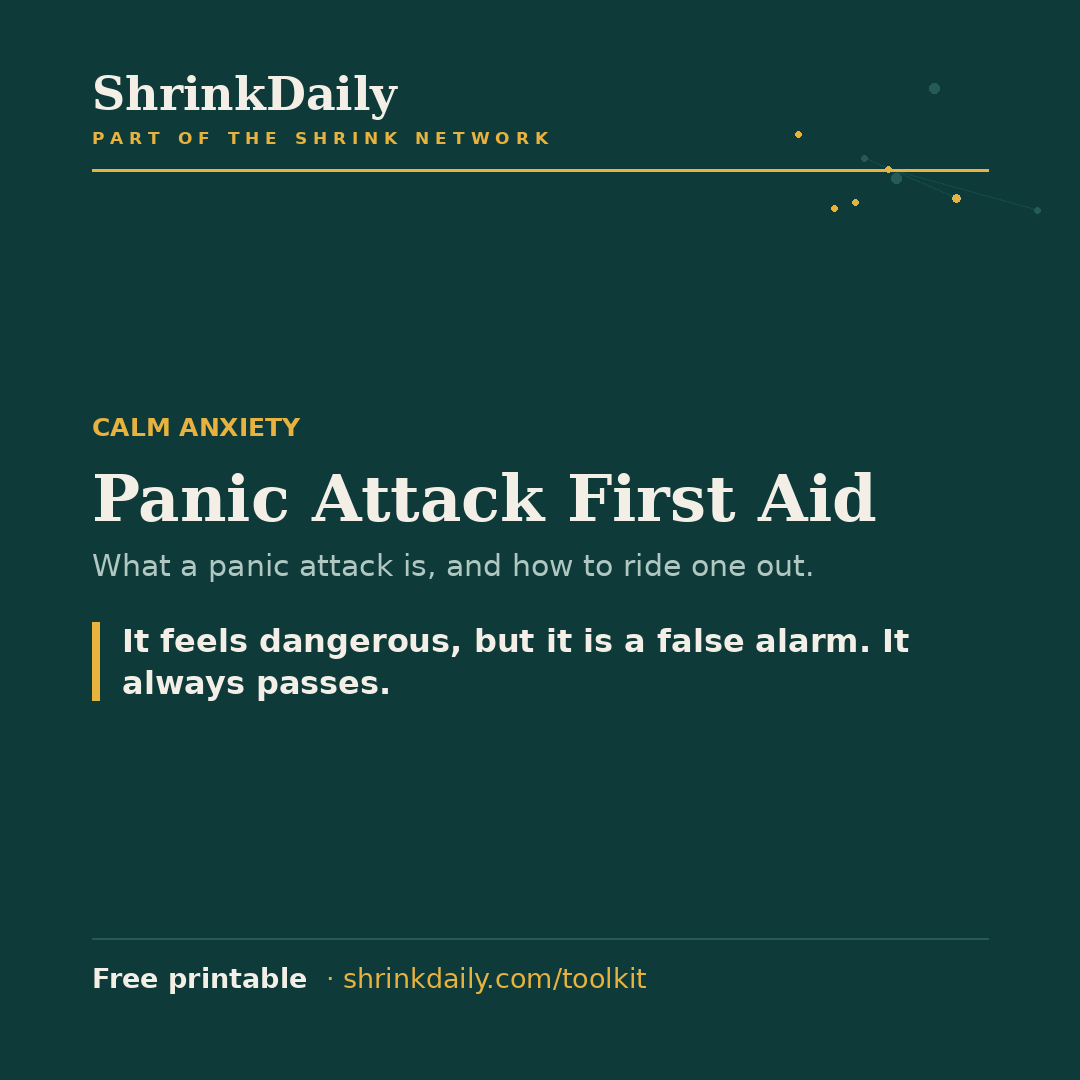
Panic Attack First Aid
What a panic attack is, why it can't hurt you, and steps to ride one out.
Lift low mood
Gentle, evidence-based ways to re-engage when motivation is gone.
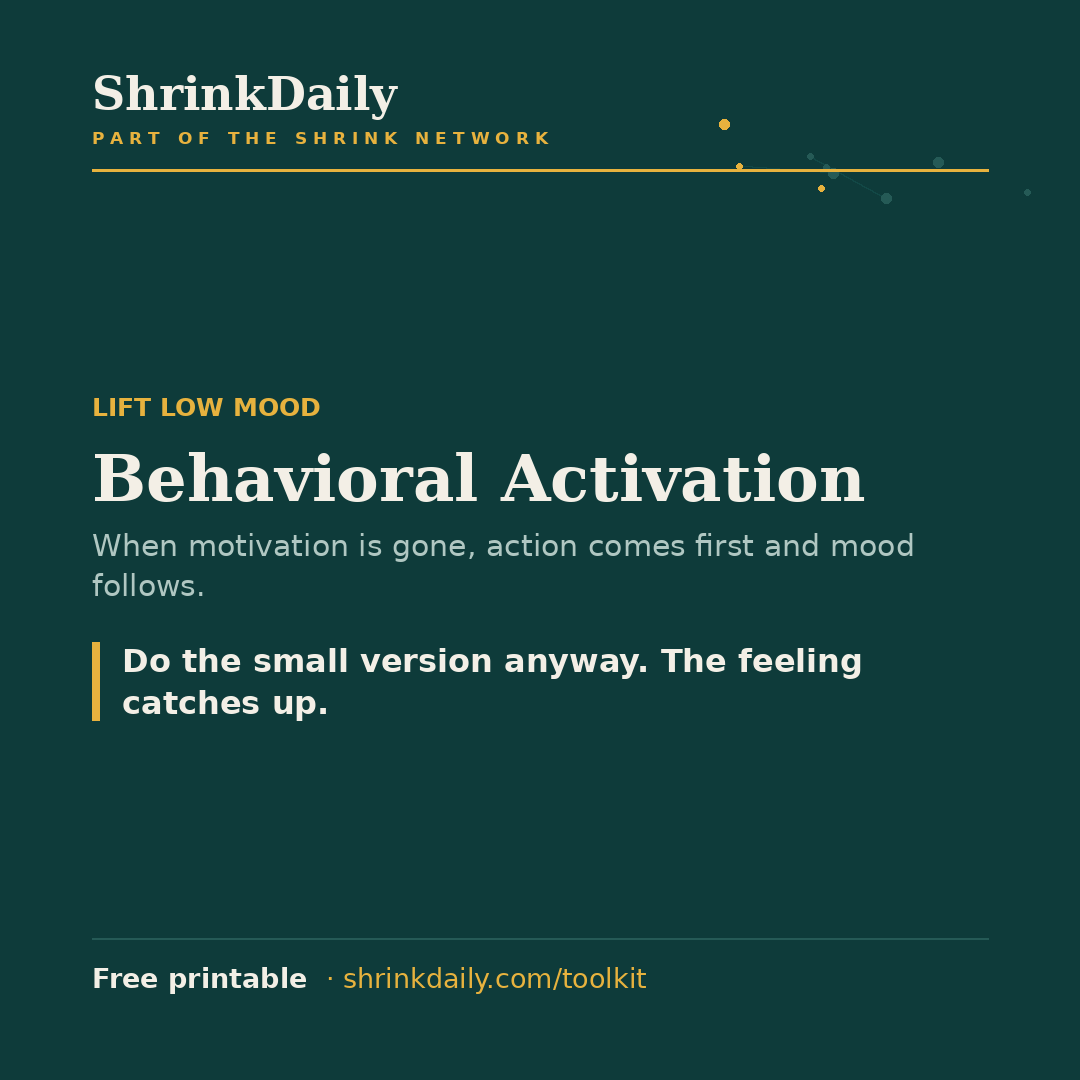
Behavioral Activation: An Activity Planner
When low mood saps motivation, action comes before the feeling. A gentle planner to re-engage with what matters.
Focus, sleep, and the brain
Support attention, executive function, and rest.
Executive Function: Your Brain's Management System
The mental skills that plan, focus, remember, and self-regulate, and a simple support for each.
Sleep: How It Works and a Wind-Down Routine
The two systems that drive sleep, and a simple evening routine to fall asleep more easily.
The Sleep Diary
A simple week-long log to spot what helps and what hurts your sleep.
Executive Function Scaffolds for Adults with ADHD
Six real-life supports for the executive skills that are hardest with ADHD. Change the task, not the effort.


Sleep for Shift Workers
Practical, evidence-informed changes for before, during, and after the shift.


Name feelings, values, and relationships
Build emotional vocabulary and act on what matters to you.
Attachment Styles: A Quick Guide
The four ways we connect, the signs of each, and what helps each grow more secure.


Name the Feeling: An Emotion Vocabulary
Precise words for emotions calm them and sharpen your response, from broad to specific.
Values Clarification: A Worksheet
When you're stuck or overwhelmed, values point the way. Name what matters and act on it.

Boundaries: A Starter Guide
What healthy boundaries are, the main kinds, and simple language you can use to set them.
Cooling Down Anger
A quick plan for the moment anger spikes, and what to do once the heat passes.
The Self-Compassion Break
Three short steps to steady yourself in a hard moment, based on self-compassion research.
Boundaries: A Starter Guide for Teens
What healthy boundaries are, five kinds you can set, and plain-language phrases teens can actually use with friends, family, and online.


Teams, workplaces, and clinical care
Free one-page resets built for teams, HR, and primary care.
The Workplace Daily Reset
Five one-minute practices for common workday moments. Made to print, post, or share with the team.


Five-Minute Mental Reset for Primary Care Teams
A between-patients reset built for the real clinical day. Post it at the workstation or share it in the huddle.


When to Escalate: A Clinician's Reference
Seven common signals and reasonable next steps for primary care, therapists, coaches, and school staff.


About these resources
ShrinkDaily is the daily learning layer of The Shrink Network, an independent family of mental health resources founded and medically reviewed by Shariq Refai, MD, MBA. This toolkit turns the most useful concepts in our atlas into printable, shareable one-pagers, so the ideas don't stay trapped in a single article. Each sheet is written in the same plain, human voice as the rest of the site, grounded in established clinical frameworks, and labeled clearly as educational.
These handouts work best as a starting point for understanding and reflection, not as a diagnosis or a treatment plan. Read them, print them, bring them to a conversation with a professional, and use them to ask better questions about what's going on for you or the people you support.
Frequently asked questions
Are these resources really free?
Yes. Every printable is completely free to download, print, and share. No sign-up, no email, and no ads.
Do I have to give my email or make an account?
No. You can download any resource straight away, with nothing to fill in first.
Are these a substitute for therapy or medical care?
No. They're educational information only, not medical or legal advice, and using them doesn't create a doctor-patient relationship. If you're struggling, please talk with a licensed professional.
Are they evidence-based?
They're grounded in widely used, evidence-informed frameworks such as cognitive behavioral therapy, the window of tolerance, and behavioral activation, written in plain language. They're general and educational, not clinical protocols, and they may not fit your situation or the standards of your area.
Can therapists, teachers, and coaches share these with clients or students?
Yes, you're welcome to share them. They're educational examples, not a substitute for your own clinical judgment, and they may not fit every person or jurisdiction.
Who writes and reviews them?
They're created under the direction of Shariq Refai, MD, MBA, a board-certified psychiatrist, and published by ShrinkDaily, part of The Shrink Network. Each one links to the concept it explains in the Shrink Atlas.
Which one should I start with?
If your mind races, start with the Overthinking worksheet or Cognitive Distortions. For anxiety or overwhelm, try Grounding or the Window of Tolerance. For low mood, the Behavioral Activation planner is a gentle first step.
Can I print them and hand them out?
Yes. Each is a one-page PDF made to print and share as is. Please keep it intact with its source and disclaimer.
What if I am in crisis right now?
If you're in crisis or thinking about suicide, call or text 988 in the US, call 911, or go to the nearest emergency room. These printables aren't for emergencies.